
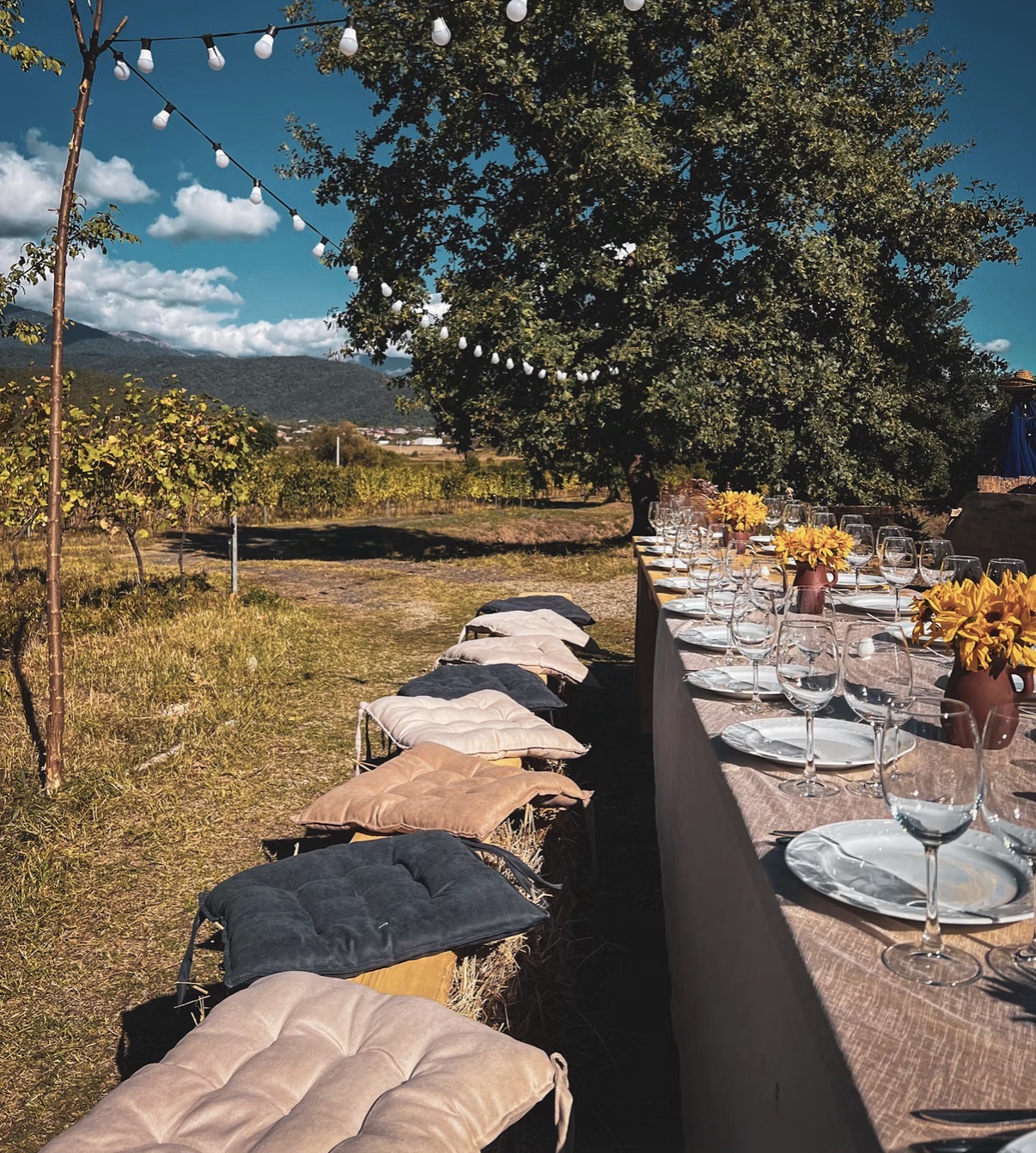
Georgia has been making wine for roughly 8,000 years. The qvevri method — fermenting wine in large clay vessels buried underground — is recognized by UNESCO as a piece of protected human cultural heritage. This is, by most reasonable definitions, the birthplace of wine as we know it. And yet most American wine drinkers, including serious ones, have never tasted a Georgian wine or could not place Georgia on a map.
This gap is not about quality. It is about distribution, awareness, and the absence of anyone organizing the introduction.
What makes Georgian wine genuinely different
Georgian wine is not simply "another European wine region." The qvevri method produces something structurally distinct from anything French, Italian, or Californian winemaking traditions produce — amber wines (often labeled "orange wine" in the US) with extended skin contact, tannic structure usually associated with red wines, and a flavor profile that has no direct European equivalent. This is not a marketing angle. It is a genuinely different category that the natural wine and orange wine movements in the US have already started gesturing toward without most consumers realizing Georgia is where the technique originated.
Why French wine got there first and stayed there
- A century of organized export infrastructure. French wine regions built formal export relationships, distributor networks, and brand recognition systems over more than a hundred years. Georgian wine export to the US, by contrast, is still in its early stages — strong production, weak distribution.
- Existing American distributor relationships. Major US wine importers and distributors already have deep relationships with French, Italian, and Spanish producers. Georgian wineries, even excellent ones, often have no existing relationship with anyone positioned to get their bottles onto American shelves or wine lists.
- Category education gap. French wine regions and varietals are taught in every sommelier program and wine course in America. Qvevri winemaking, amber wine, and Georgian indigenous grape varieties like Saperavi, Rkatsiteli, Mtsvane, and Kisi are largely absent from that education, which means even motivated American buyers do not know what questions to ask.
- Underpriced relative to quality. Many Georgian wineries, benchmarking against domestic and regional pricing rather than the American premium wine market, price their wines well below what the quality and story would support — which paradoxically makes them harder to place in premium American retail and restaurant programs that read low price as low quality.
What the opportunity actually looks like
The American premium and natural wine market has shown a consistent appetite for exactly the kind of story Georgian wine offers: ancient method, indigenous grapes, small-production authenticity, a narrative that cannot be replicated by larger commercial wine regions. Sommeliers and wine directors at serious restaurants are actively looking for differentiated additions to their lists. Specialty wine shops in cities with strong natural wine cultures — Brooklyn, Portland, parts of Los Angeles and Chicago — are precisely the kind of first beachhead where Georgian wine could establish itself before wider market awareness catches up.
The wineries that get organized US representation now, while the category is still emerging in American consciousness, are positioned to become the reference points for Georgian wine in the US market — the way a small number of early-moving producers became synonymous with natural wine more broadly over the last fifteen years.
Georgian winery ready for the US market?
We know this corridor and this category. Tell us about your wine and let's find out if America is ready for it.
Start a Conversation →