Education · Georgian Wine
Eastbound Advisory · 5 min read
 Written by Nick Russell
Written by Nick Russell
Written by Nick Russell
If you have heard the term qvevri and have no idea what it means, you are not alone. Most American wine drinkers — even serious ones — have never encountered the word. That is about to change.
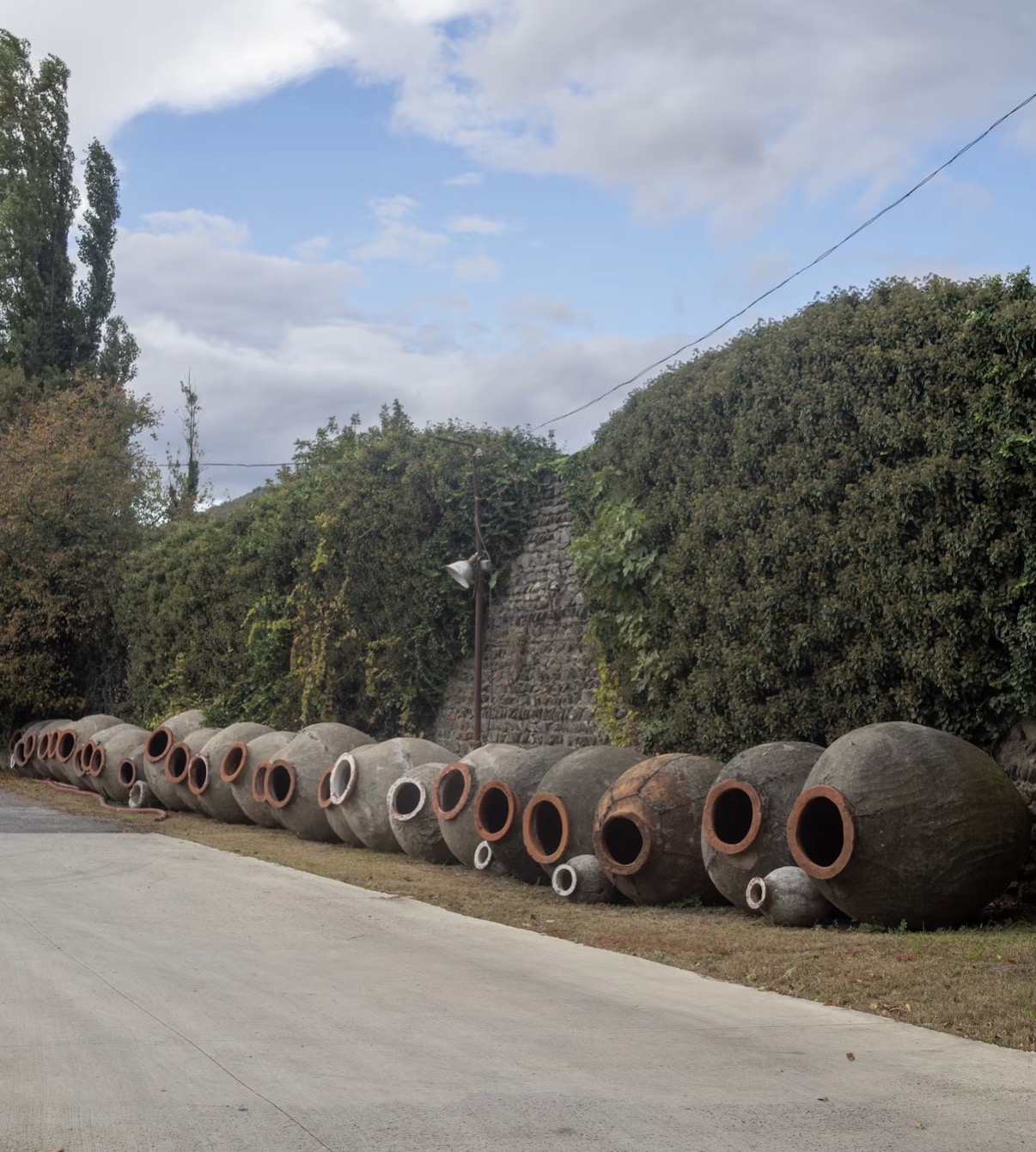
Qvevri (pronounced kvev-ree) is a large clay vessel, typically ranging from 100 to 3,000 liters, that is buried in the ground up to its neck. Georgian winemakers ferment and age their wine inside it. The vessel is sealed with beeswax. The temperature is regulated by the earth itself. No machinery. No temperature control systems. No additives. Just clay, earth, and time.
The earth surrounding a buried qvevri maintains a consistent temperature year-round — cool in summer, insulated in winter. This natural temperature stability is something modern wineries spend enormous amounts of money and energy replicating with refrigeration systems. Georgia figured it out 8,000 years ago and buried a clay pot.
The shape of the qvevri — wide at the shoulder, tapering to a point at the base — also serves a function. The pointed bottom allows grape solids to settle and compact naturally during fermentation, creating a clear separation between the clarifying wine and the sediment. No filtration required.
White grapes fermented in qvevri with extended skin contact produce amber wine — the term Georgians have always used, and the one now gaining ground with American sommeliers over the market nickname "orange wine." These are white wines with the tannin structure and color of a light red — deep golden or amber in the glass, with a texture and complexity that conventional white wine production cannot replicate.
For the American natural wine buyer, this is exactly what they have been looking for — wines with genuine character, a real story, and a production method that cannot be faked or industrialized. The qvevri is not a marketing device. It is a 8,000-year-old technology that simply works.
We know this corridor and this category. Tell us about your wine.
Start a Conversation →